Developer Tool / Browser Automation

bulk-delete-claude-chat

A small JavaScript utility that bulk deletes Claude.ai conversations from the web UI by calling the internal API. The README explains why it exists, how to run it in the browser console, and warns that deletion may take several minutes.

Clear24/30
Useful21/30
Specific16/20
Complete11/20
bulk-delete-claude-chat screenshot

Why it was accepted

The page is clearly for a practical AI-adjacent developer utility: a script for deleting Claude chats in bulk. It includes enough evidence to understand the use case, the workflow, and the main constraint that it uses the Claude web UI and internal API. That is sufficient for a public listing, and it reaches the acceptance threshold.
Weakness

The snapshot does not show the script contents, so visitors cannot tell what API calls it makes or whether it handles errors, multiple orgs, or auth edge cases beyond the brief README instructions.

Review status

8 days ago #692 ↑ +1

Last evaluated 8 days ago. Current rank #692. Up 1 spot in the rankings.

Score history

72

Related listings

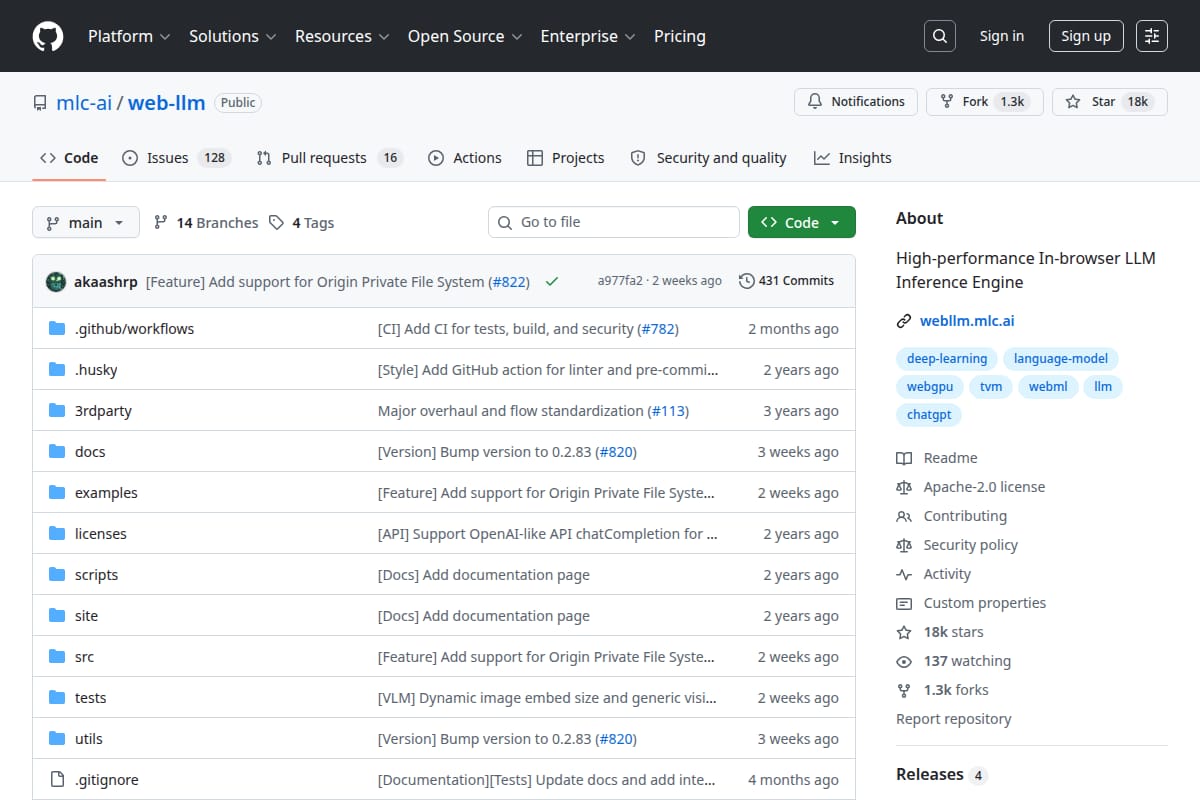
WebLLM screenshot
#4 WebLLM
92

Developer Tool / AI SDK / In-browser LLM inference

WebLLM is a high-performance in-browser LLM inference engine that runs locally in the browser with WebGPU acceleration. It exposes an OpenAI-compatible API, supports streaming and JSON mode, and includes examples for building chat apps and browser extensions.

Flightdeck screenshot
90

Developer Tool / AI Observability

Self-hosted observability and control plane for production and coding AI agents, with live timelines, fleet-wide feeds, token budgets, MCP allow/block rules, and support for Claude Code plus a Python sensor.

Redact screenshot
#42 Redact
89

Developer Tool / Browser Extension

Browser extension that scans pastes for credentials and PII before they reach LLM chat sites, with local on-device inference and no network calls.

OSymandias screenshot
88

Developer Tool / AI Agent Runtime / Orchestration

Open-source runtime for multi-agent AI systems with job scheduling, DAG orchestration, shared memory, tool execution, and real-time observability.