Developer Tool / AI Coding Harness

llmisp

A local AI coding harness that turns business-rule specs into a constrained JSON AST, validates it, and compiles it into Clojure code while logging generation and repair artifacts.

Clear25/30
Useful24/30
Specific16/20
Complete15/20
llmisp screenshot

Why it was accepted

The page clearly describes a real AI-adjacent developer tool: a local code-generation harness for small models, with a defined workflow, validation layer, runtime requirements, and example commands. It shows enough detail for a useful directory listing and makes the project’s purpose and target users easy to understand.
Weakness

The snapshot does not show installation steps beyond command examples, a project license, release status, or proof of broader model support beyond the tested Gemma setup. It also leaves open how well the generated Clojure behaves on real workloads outside the five blind specs mentioned.

Review status

15 days ago #343 ↓ -1

Last evaluated 15 days ago. Current rank #343. Down 1 spot in the rankings.

Score history

80

Related listings

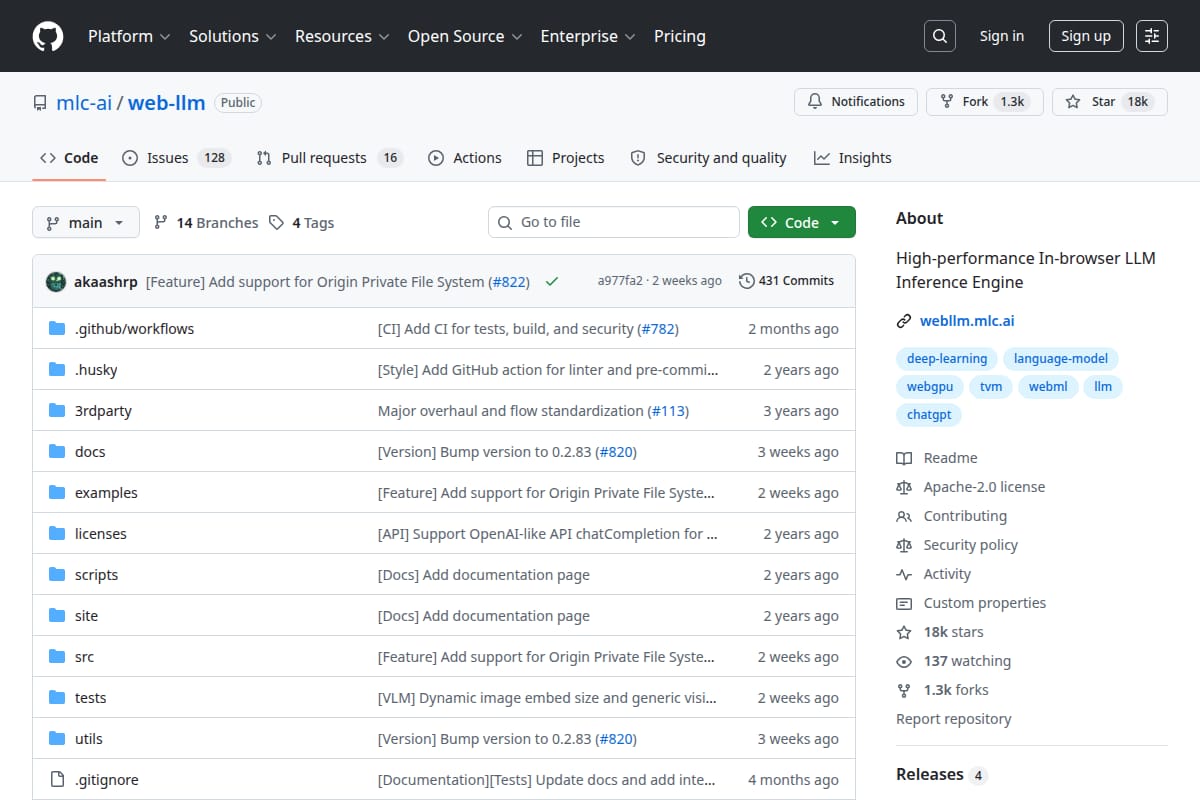
WebLLM screenshot
#3 WebLLM
92

Developer Tool / AI SDK / In-browser LLM inference

WebLLM is a high-performance in-browser LLM inference engine that runs locally in the browser with WebGPU acceleration. It exposes an OpenAI-compatible API, supports streaming and JSON mode, and includes examples for building chat apps and browser extensions.

Claude Usage Tray screenshot

Developer Tool / Productivity

A Windows system-tray app that shows Claude Code session and weekly rate-limit usage at a glance, with hover and click views for more detail.

Containarium screenshot
87

Developer Tool / AI Agent Infrastructure

Open-source, self-hostable sandbox for AI agents. It lets agents work inside isolated Linux containers through MCP tools, with CLI and host-level admin controls for creating, managing, and exposing boxes.

claude-autopilot screenshot

Developer Tool / AI Development Pipeline

Open-source autonomous development pipeline for Claude Code that moves from spec and planning through implementation, validation, PR creation, Codex review, and bug triage.