AI Developer Tool / AI Gateway / RAG Backend

ORBIT

Self-hosted, OpenAI-compatible AI gateway for private RAG, natural-language data access, and tool-calling agents. It connects files, databases, vector stores, APIs, and MCP tools through one backend with auth, observability, and governance features.

Clear28/30
Useful29/30
Specific16/20
Complete16/20
ORBIT screenshot

Why it was accepted

The page clearly describes a real AI product aimed at builders: a self-hosted gateway with an OpenAI-compatible API, private RAG, natural-language access to internal data, and tool-calling agents. It shows concrete usage details, deployment options, supported models/providers, and production-oriented features like RBAC, SSO, quotas, audit logs, and metrics, which makes it strong enough for a public listing.
Weakness

The snapshot does not show pricing, licensing details beyond the repo header, or a concise product roadmap. It also does not fully explain the adapter/YAML setup beyond the quick-start examples, so a visitor cannot tell how much configuration is needed for non-demo deployments.

Review status

89 days ago #177 → 0

Last evaluated 89 days ago. Current rank #177. Holding steady in the rankings.

Score history

89

Related listings

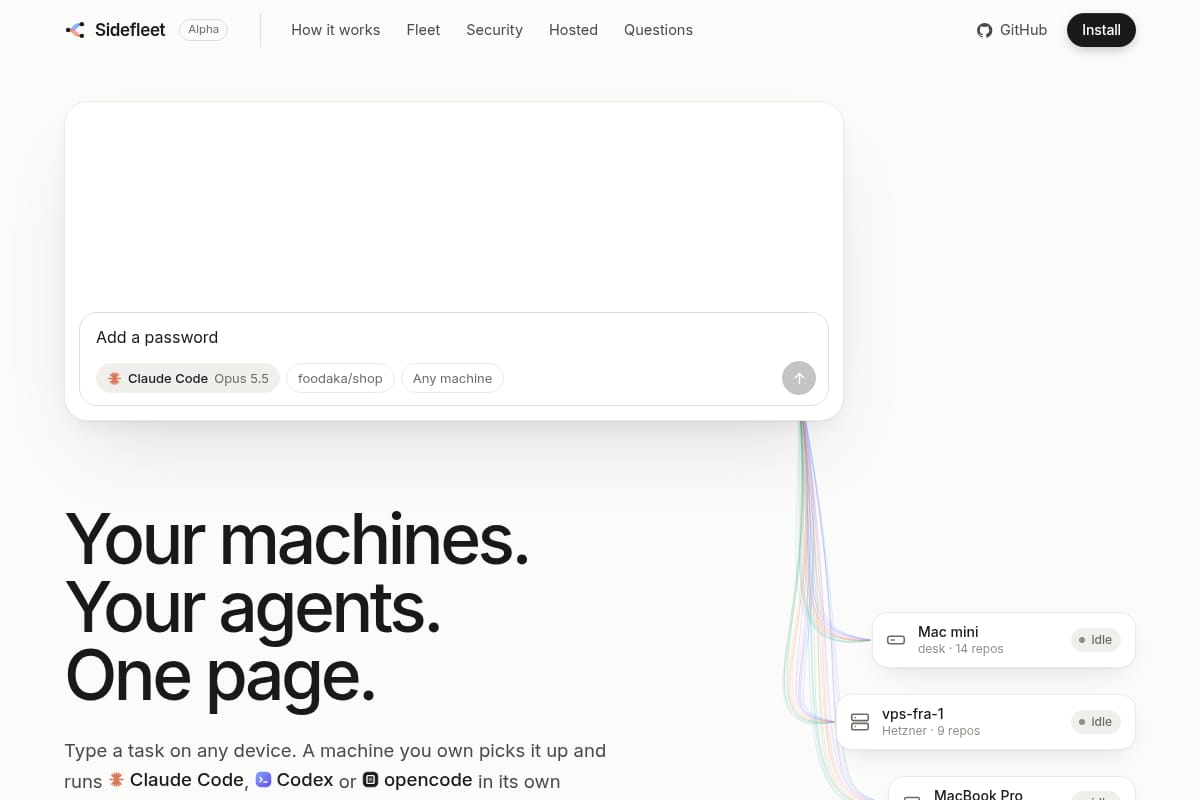
Sidefleet screenshot
#38 Sidefleet
90

AI Developer Tool / Coding Agents / Orchestration

Sidefleet is a self-hosted control plane for running coding agents across your own machines. It routes tasks to the least busy machine with the right repo and agent, runs work in isolated git worktrees, streams progress live, and supports Claude Code, Codex, and opencode.

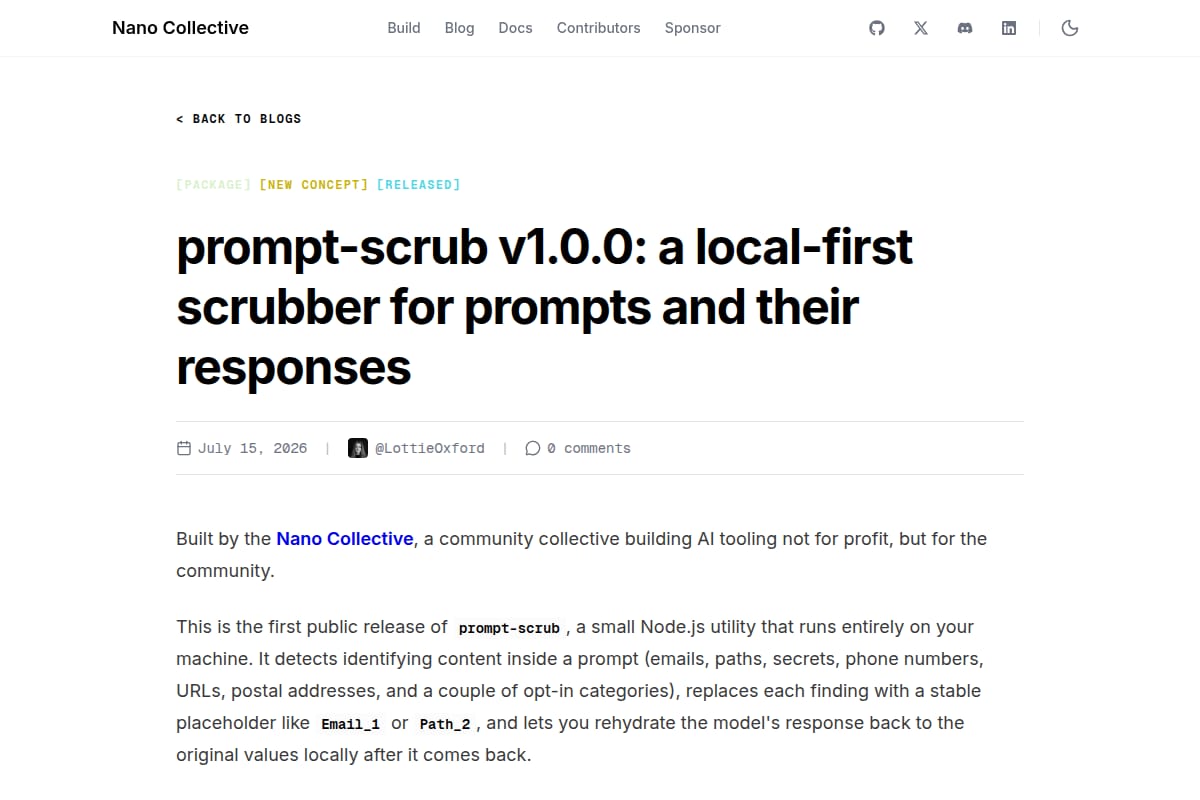
prompt-scrub screenshot
90

AI Developer Tool / Prompt privacy / PII redaction

A local-first Node.js utility that redacts emails, phone numbers, paths, secrets, URLs, and other identifiers from LLM prompts, then rehydrates responses locally using session-based mappings.

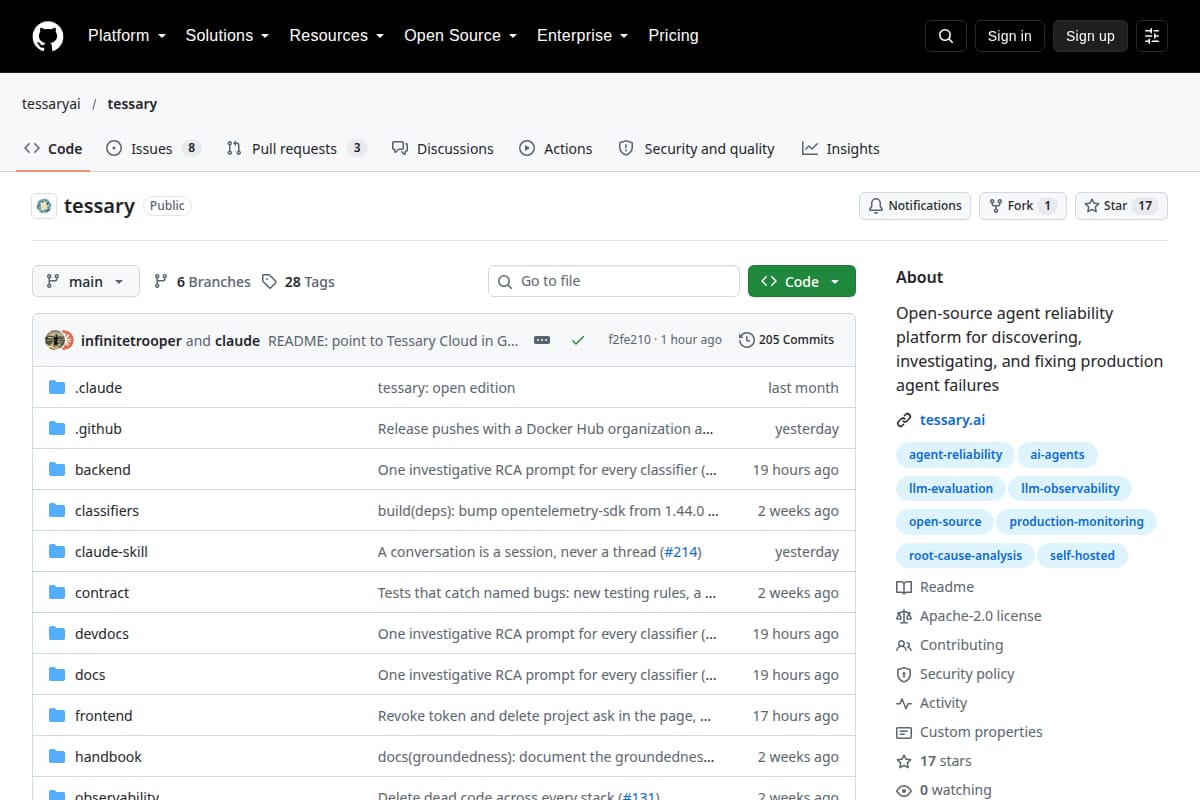
Tessary screenshot
#127 Tessary
89

AI Developer Tool / Agent reliability / observability

Open-source platform for monitoring AI agents in production, detecting failures, grouping incidents into cases, and investigating root causes with trace and repository evidence.