AI/ML / Visualization

Tiny-Net: learned token embeddings in 2D

An interactive visualizer showing how a tiny byte-level language model learns 2D token embeddings during training. It includes controls for stepping, pausing, resetting, and adjusting training behavior while plotting the learned vectors.

Clear25/30
Useful18/30
Specific17/20
Complete17/20
Tiny-Net: learned token embeddings in 2D screenshot

Why it was accepted

The page clearly presents an interactive AI/ML demo with visible model architecture, training controls, and a live embedding plot. The snapshot shows enough concrete detail to understand the project, its purpose, and how a visitor would use it.
Weakness

The snapshot does not show source code, installation instructions, or a broader explanation of the project beyond the demo itself. It also does not indicate whether the visualizer is part of a larger toolkit or what other examples are available.

Review status

52 days ago #2165 → 0

Last evaluated 52 days ago. Current rank #2165. Holding steady in the rankings.

Score history

77

Related listings

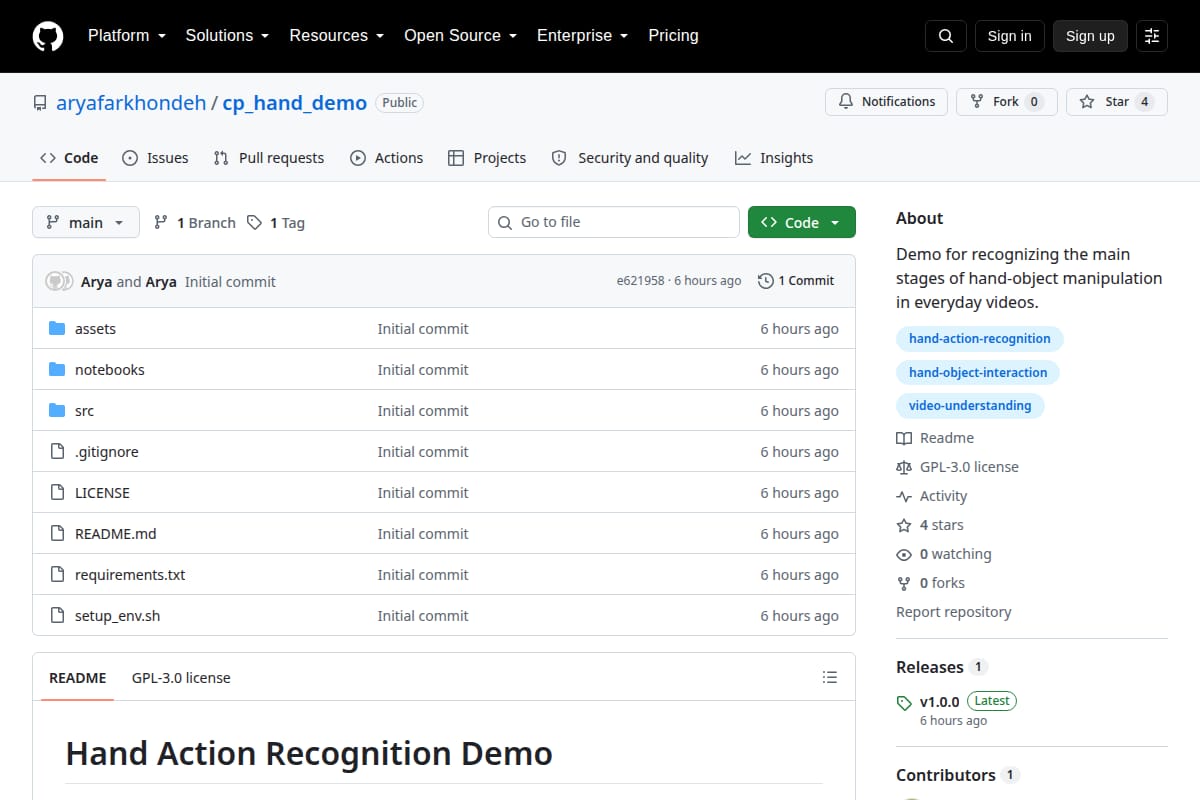
cp_hand_demo screenshot
#1005 cp_hand_demo
84

AI/ML / Computer Vision

Open-source demo for recognizing hand-object manipulation stages in everyday video, with installation steps, run commands, and a short explanation of the pipeline.

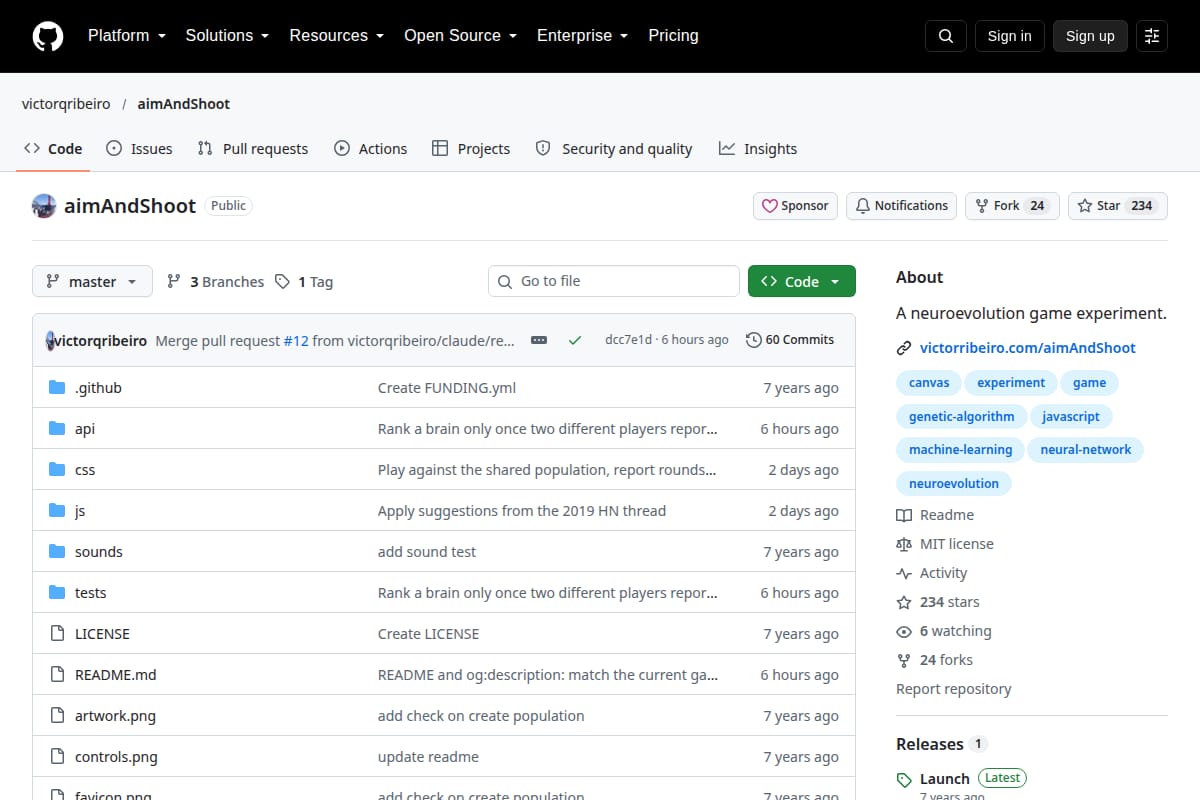
Aim and Shoot screenshot
83

AI/ML / Neuroevolution Game

A browser game experiment where bots are controlled by neural networks and evolved with a genetic algorithm. The 2026 update adds shared server-side evolution, improved bot behavior, and a PHP/SQLite backend.

Speculative Decoding in vLLM on AMD GPUs screenshot

AI/ML / Inference Optimization

A detailed vLLM blog post explaining speculative decoding on AMD GPUs, with mechanics, supported drafting methods, configuration guidance, tuning advice, and benchmark discussion.

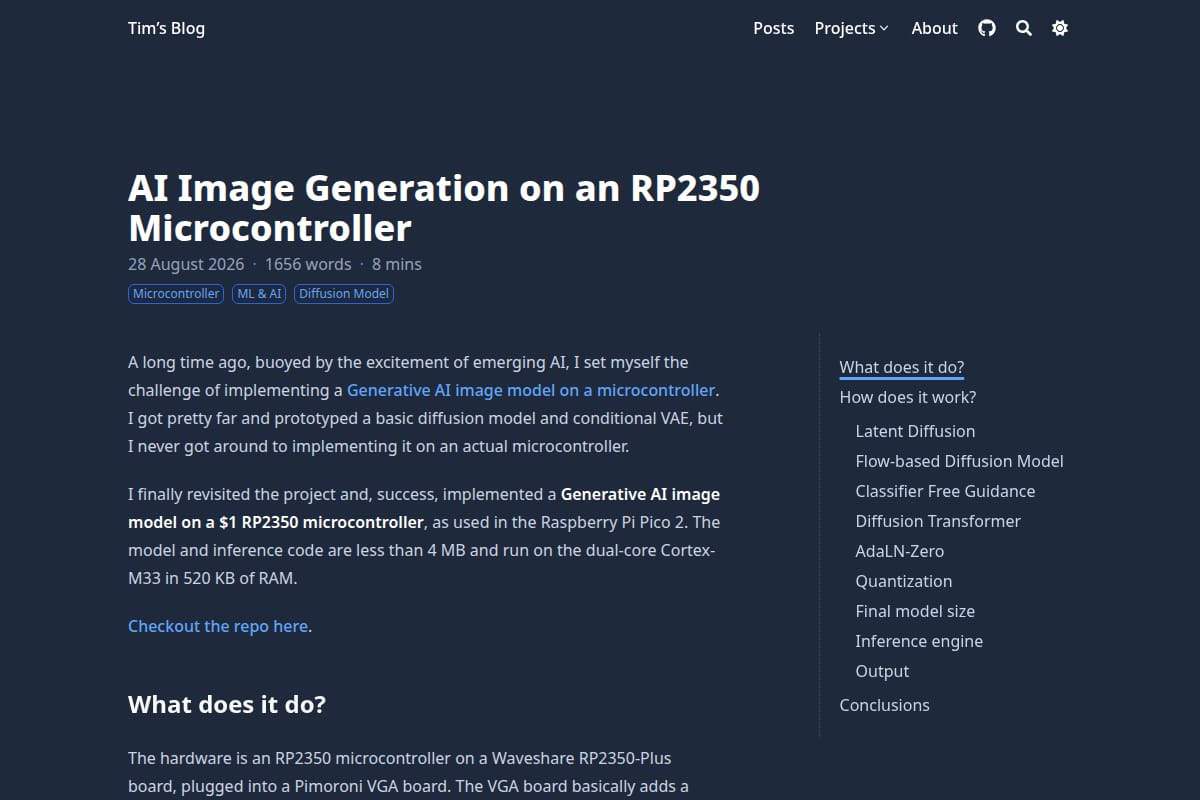
AI Image Generation on an RP2350 Microcontroller screenshot

AI/ML / Generative AI

A technical blog post showing a tiny diffusion transformer running on an RP2350 microcontroller to generate 128×128 face images, with details on model design, quantization, and on-device inference.