Research / ML Experiment / Benchmark Result

44% on ARC-AGI-1 in 67 cents

A research blog post describing an open-source small transformer trained from scratch to reach 44% on ARC-AGI-1 at very low cost, with architecture notes, ablations, and pointers to code.

Clear25/30
Useful20/30
Specific18/20
Complete15/20
44% on ARC-AGI-1 in 67 cents screenshot

Why it was accepted

The page clearly documents an AI research result with concrete benchmark performance, a described training approach, ablations, and open-source code mention. It offers enough evidence for a useful public listing as a research/ML experiment page.
Weakness

The crawl does not show the actual code repo, training setup details, or reproducible instructions, so a visitor cannot fully judge how to run or verify the result from this page alone.

Review status

just now #1551 ↑ +6

Last evaluated just now. Current rank #1551. Up 6 spots in the rankings.

Score history

78

Related listings

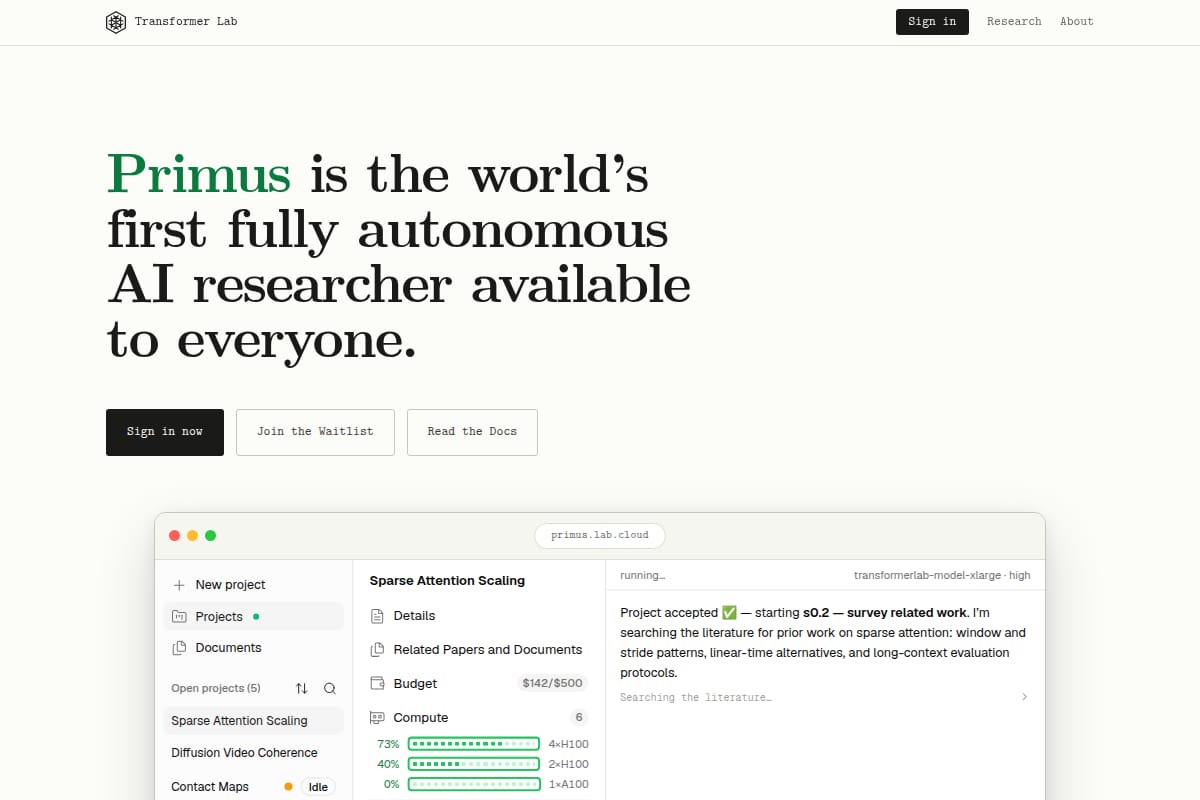
Primus AI Researcher – Free screenshot

Research / Knowledge Work

Primus is an autonomous AI researcher that hypothesizes, reads papers, writes code, runs experiments on compute, and drafts research papers. The page shows example tasks, published-paper claims, waitlist access, and positioning for ML research workflows.

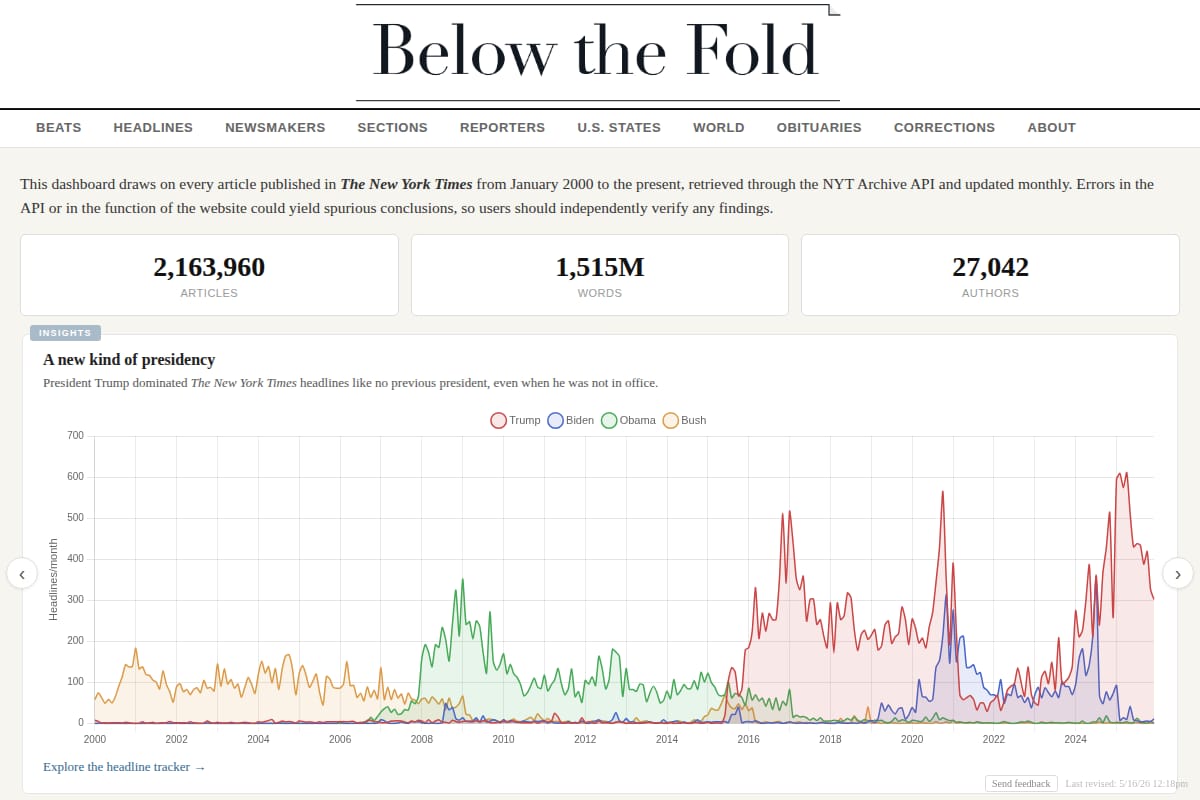
Below the Fold — A New York Times X-Ray Dashboard screenshot

Research / Data Visualization

An interactive dashboard that analyzes New York Times coverage since 2000 using the NYT Archive API, with views for reporters, beats, sections, subjects, geography, obituaries, and corrections.

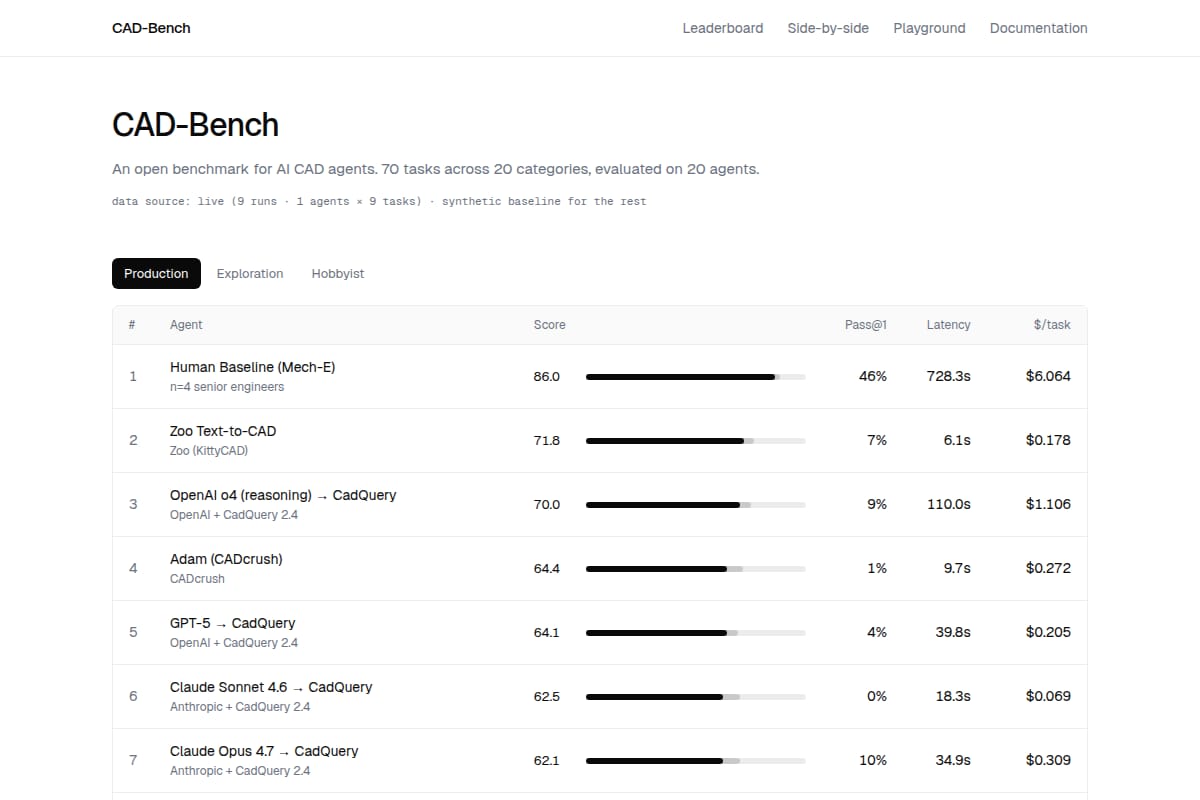
CAD-Bench screenshot
#307 CAD-Bench
88

Research / Knowledge Work

An open benchmark and leaderboard for AI CAD agents, with 308 prompts across 20 categories and layered scoring for geometry, engineering, manufacturability, and cognition.

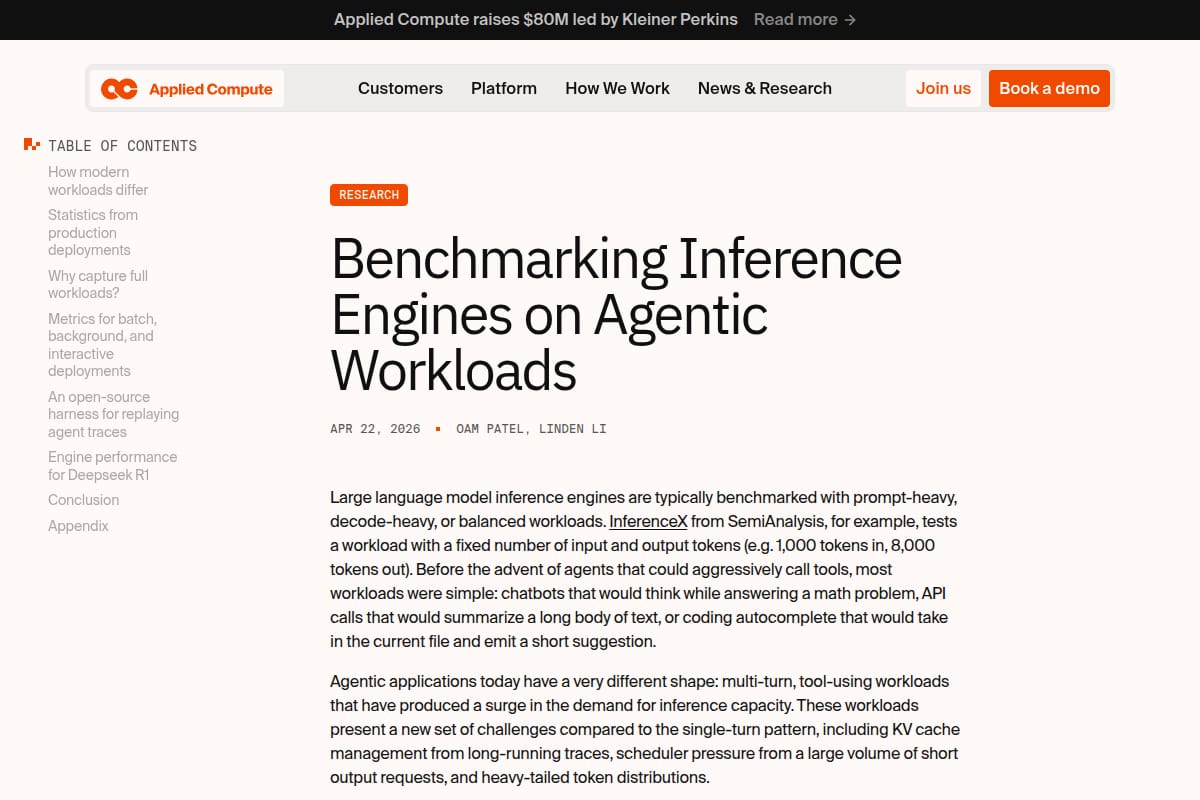
Benchmarking Inference Engines on Agentic Workloads screenshot

Research / Knowledge Work

A research article from Applied Compute on how agentic, tool-using workloads differ from traditional LLM benchmarks, with production observations, workload profiles, and an open-source harness for replaying traces.