Research / Scientific Computing

ITB Engine

A research repository and local web app for testing quantum gravity theory-space exclusions against encoded consistency constraints. It includes a CLI, a localhost interface, test coverage, and an LLM-powered research agent for running searches and report generation.

Clear24/30
Useful23/30
Specific18/20
Complete11/20
ITB Engine screenshot

Why it was accepted

The page clearly describes an active research tool with a concrete purpose, install/run commands, a CLI, a web app, tests, and an LLM-powered agent workflow. The README gives enough evidence to understand what the project does and how a developer or researcher could use it.
Weakness

The snapshot does not show the actual outputs, report structure, or a walkthrough of the core workflow beyond command examples. It also does not make it easy to tell which frameworks or model backends are required for the local agent beyond the examples shown.

Review status

22 days ago #431 ↓ -1

Last evaluated 22 days ago. Current rank #431. Down 1 spot in the rankings.

Score history

76

Related listings

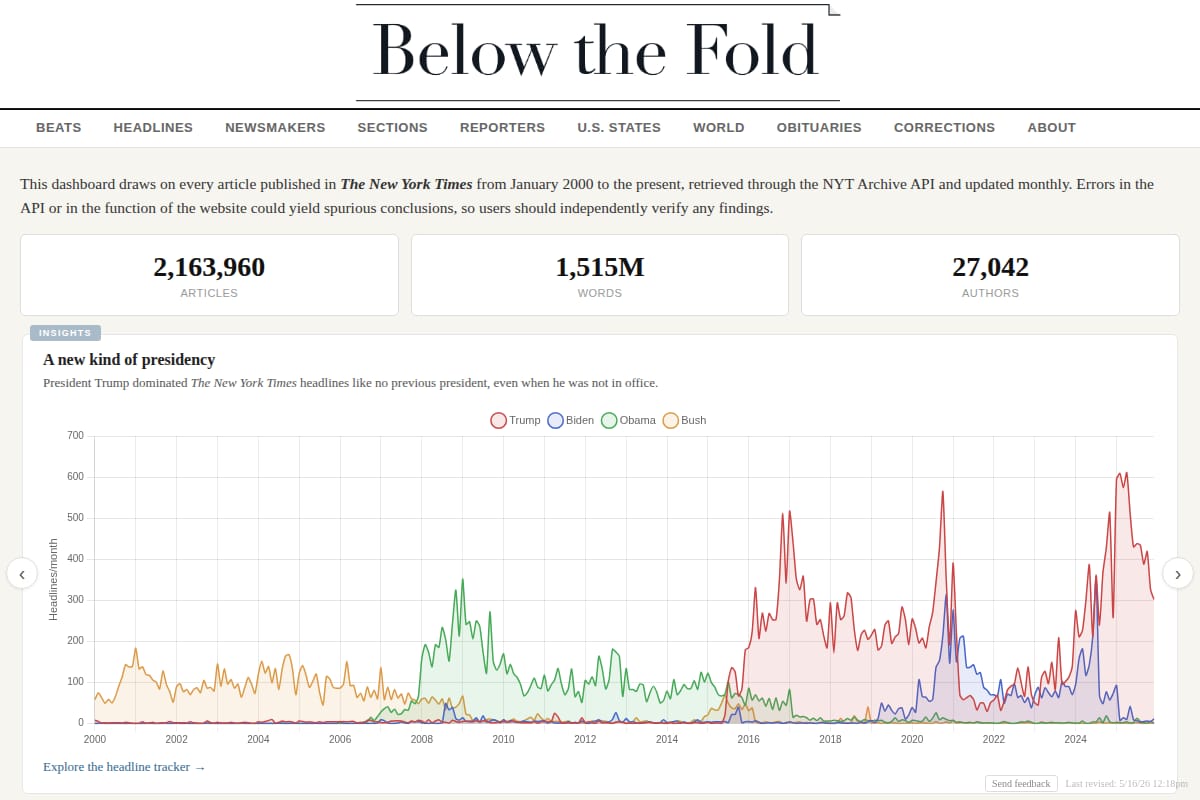
Below the Fold — A New York Times X-Ray Dashboard screenshot

Research / Data Visualization

An interactive dashboard that analyzes New York Times coverage since 2000 using the NYT Archive API, with views for reporters, beats, sections, subjects, geography, obituaries, and corrections.

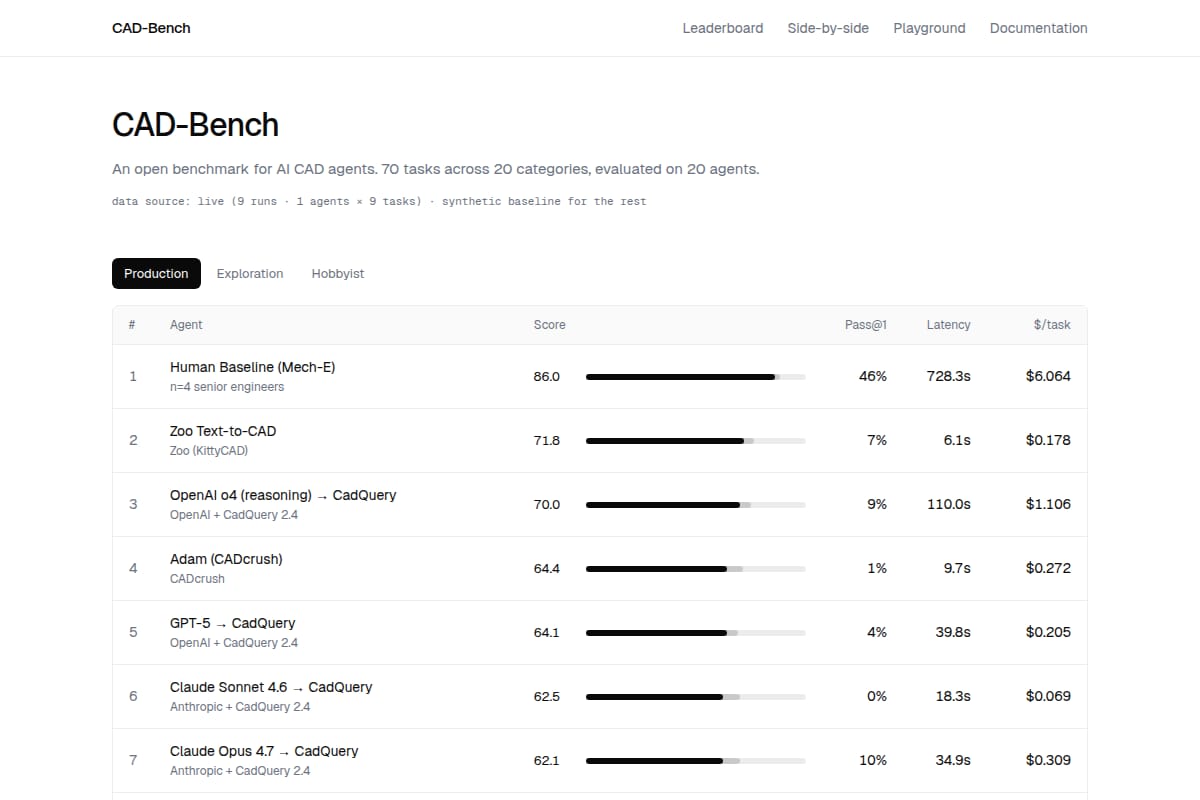
CAD-Bench screenshot
#56 CAD-Bench
88

Research / Knowledge Work

An open benchmark and leaderboard for AI CAD agents, with 308 prompts across 20 categories and layered scoring for geometry, engineering, manufacturability, and cognition.

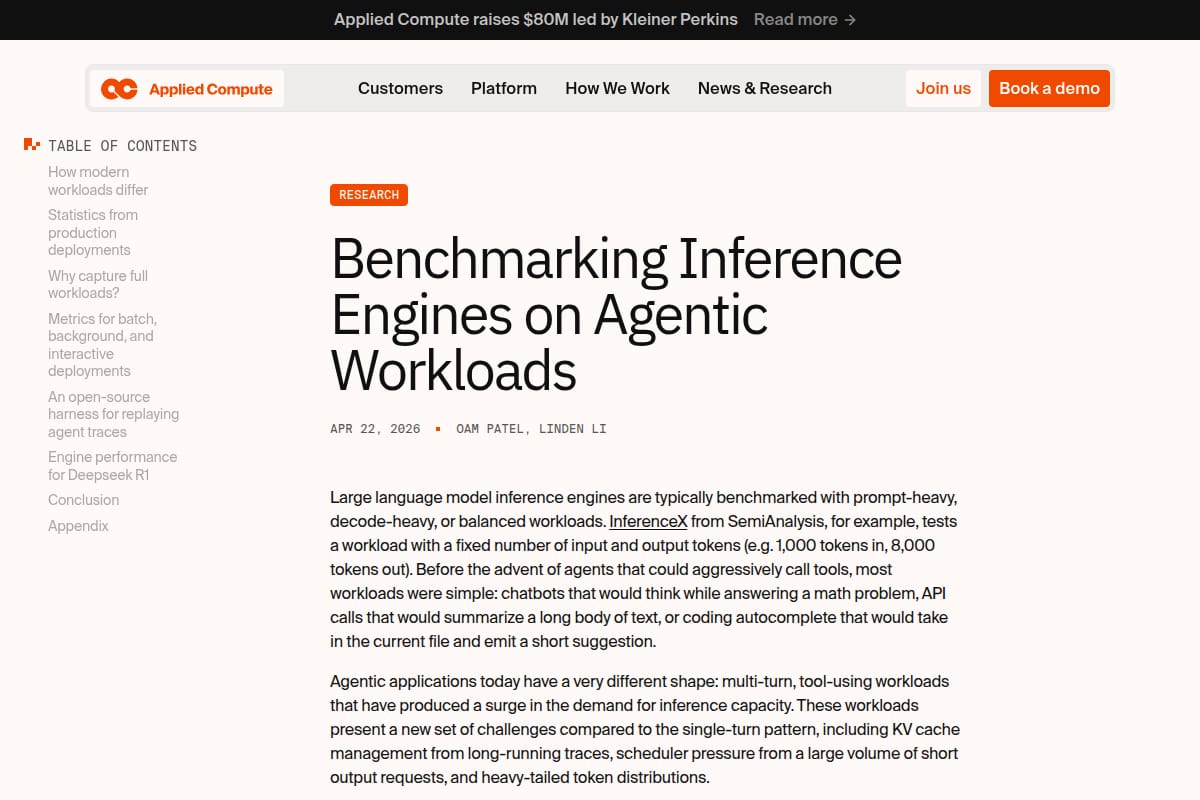
Benchmarking Inference Engines on Agentic Workloads screenshot

Research / Knowledge Work

A research article from Applied Compute on how agentic, tool-using workloads differ from traditional LLM benchmarks, with production observations, workload profiles, and an open-source harness for replaying traces.

Alignment Whack-a-Mole screenshot

Research / Copywriting

A research code repository for studying how fine-tuning can trigger verbatim recall of copyrighted books in large language models. It includes preprocessing, fine-tuning, generation, and memorization-evaluation scripts, with setup notes and example data.