Research / Knowledge Work

Physics AI

Physics AI is a physics homework and study tool that solves problems from photos or typed prompts, with step-by-step explanations, tutor mode, and visual breakdowns for diagrams and vectors.

Clear27/30
Useful27/30
Specific14/20
Complete15/20
Physics AI screenshot

Why it was accepted

The page clearly presents a working AI-powered product for physics problem solving. It explains the core workflow, shows supported input types like photos and typed questions, gives concrete example topics, and describes two modes for fast answers or guided learning. The pricing, FAQ, and topic coverage provide enough evidence for a useful public listing.
Weakness

The page does not show independent proof of answer accuracy, model details, or a live demo. It also leaves some important limits unclear, such as which advanced physics topics are truly supported and how well diagram reading works in harder cases.

Review status

12 days ago #262 ↓ -3

Last evaluated 12 days ago. Current rank #262. Down 3 spots in the rankings.

Score history

83

Related listings

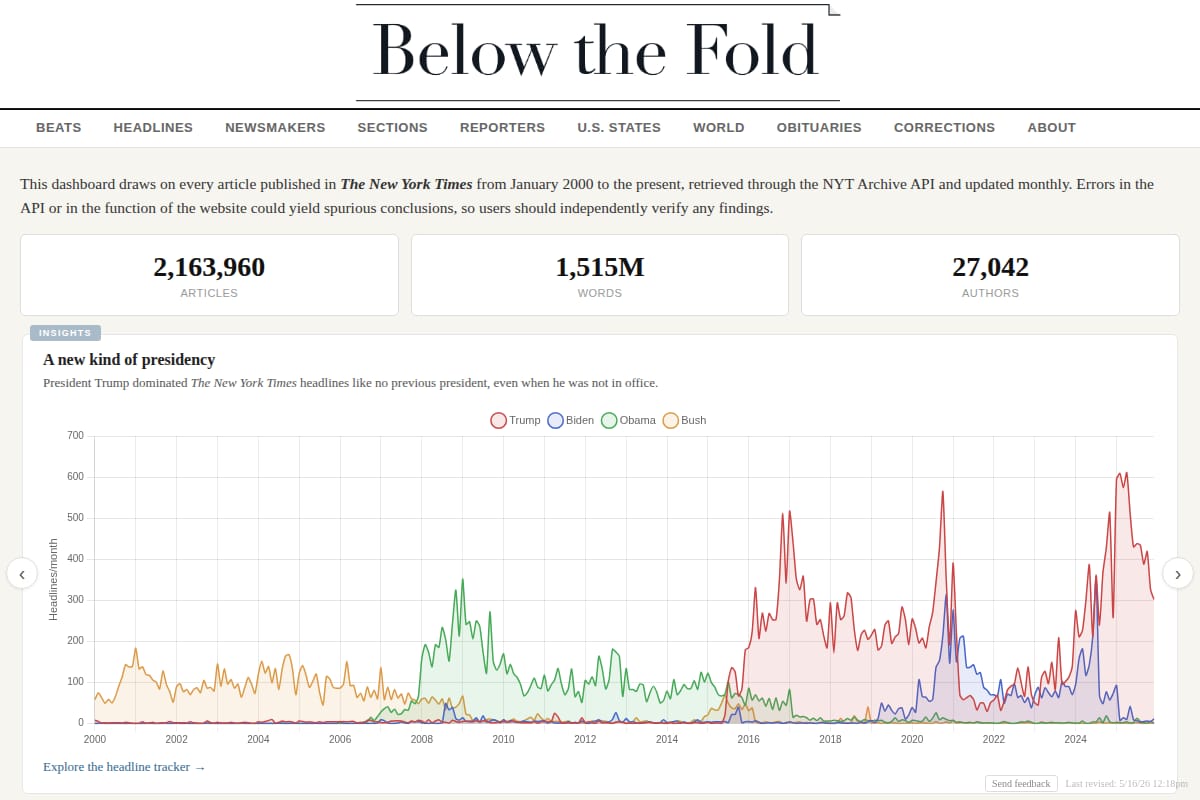
Below the Fold — A New York Times X-Ray Dashboard screenshot

Research / Data Visualization

An interactive dashboard that analyzes New York Times coverage since 2000 using the NYT Archive API, with views for reporters, beats, sections, subjects, geography, obituaries, and corrections.

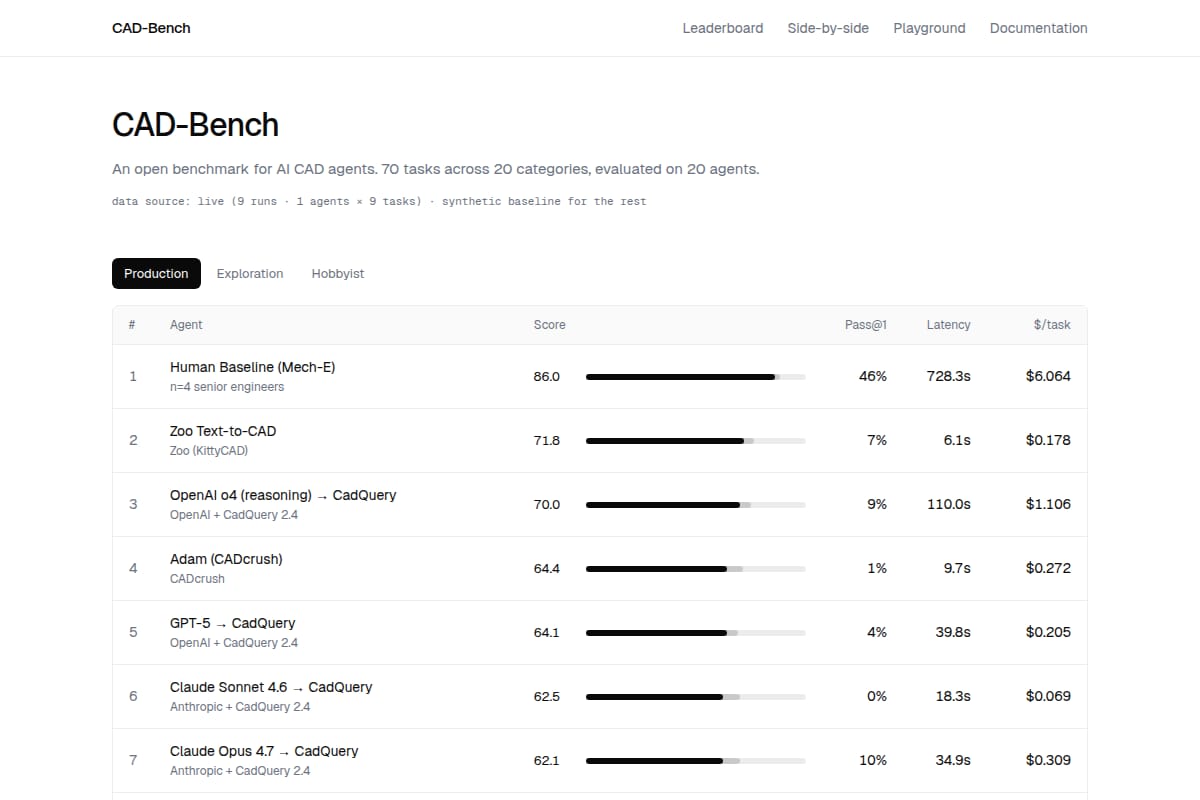
CAD-Bench screenshot
#56 CAD-Bench
88

Research / Knowledge Work

An open benchmark and leaderboard for AI CAD agents, with 308 prompts across 20 categories and layered scoring for geometry, engineering, manufacturability, and cognition.

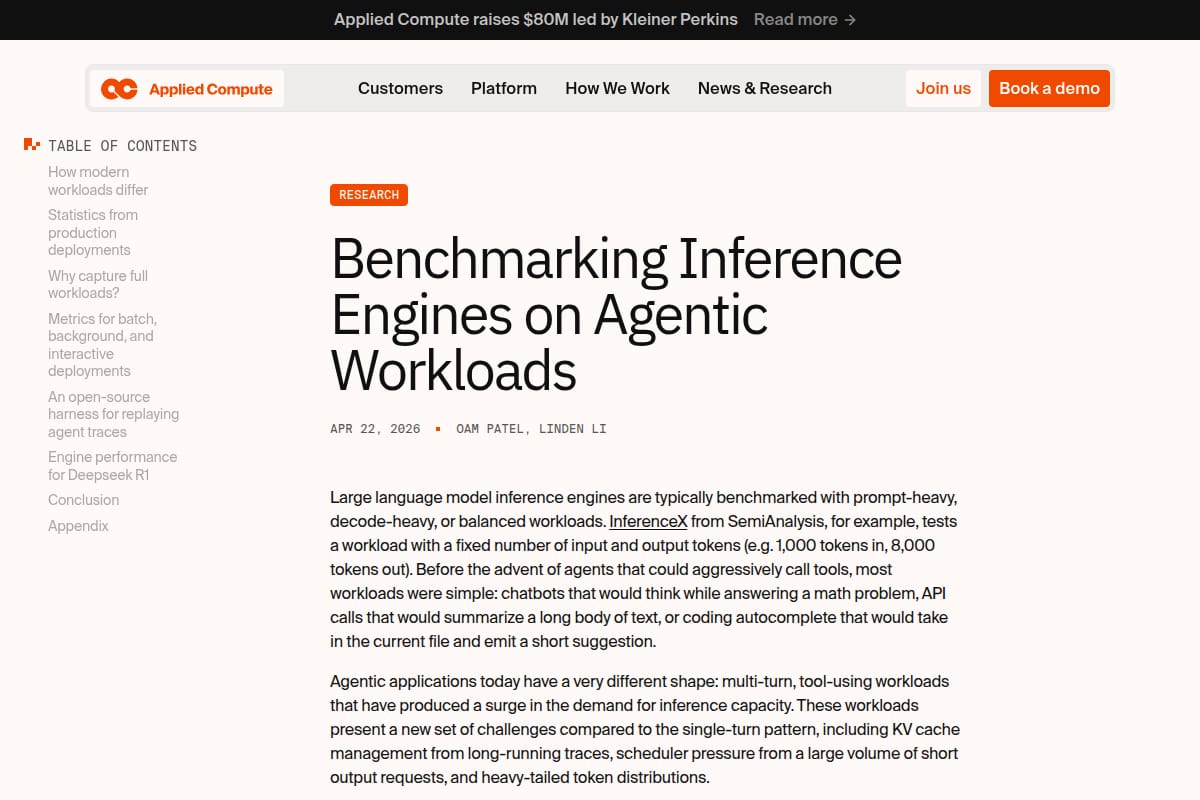
Benchmarking Inference Engines on Agentic Workloads screenshot

Research / Knowledge Work

A research article from Applied Compute on how agentic, tool-using workloads differ from traditional LLM benchmarks, with production observations, workload profiles, and an open-source harness for replaying traces.

Alignment Whack-a-Mole screenshot

Research / Copywriting

A research code repository for studying how fine-tuning can trigger verbatim recall of copyrighted books in large language models. It includes preprocessing, fine-tuning, generation, and memorization-evaluation scripts, with setup notes and example data.