Research / AI Research Paper

Cache Merging as a Convergent Replicated State for Multi-Agent Latent Reasoning

arXiv paper on a cache-merging method for multi-agent latent reasoning, framing KV-cache composition as a convergent replicated state with deterministic merging.

Clear24/30
Useful18/30
Specific16/20
Complete16/20
Cache Merging as a Convergent Replicated State for Multi-Agent Latent Reasoning screenshot

Why it was accepted

The page clearly presents a real AI research paper with a specific method, benchmark claims, and enough abstract-level detail to support a useful directory listing. It is relevant to AI builders working on multi-agent reasoning and cache-level inference techniques.
Weakness

This is only an abstract page, so visitors cannot see the full method, code, implementation details, or reproducibility assets from the crawl snapshot.

Review status

59 days ago #1764 ↓ -1

Last evaluated 59 days ago. Current rank #1764. Down 1 spot in the rankings.

Score history

74

Related listings

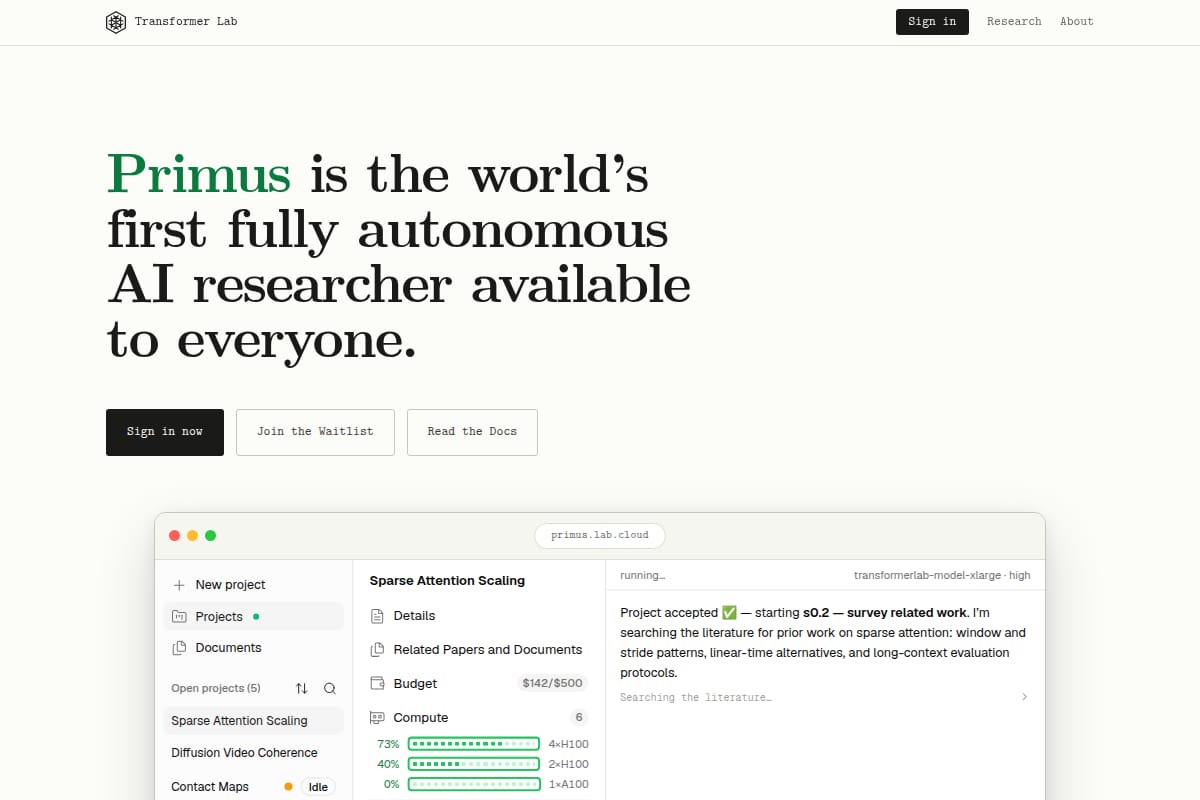
Primus AI Researcher – Free screenshot

Research / Knowledge Work

Primus is an autonomous AI researcher that hypothesizes, reads papers, writes code, runs experiments on compute, and drafts research papers. The page shows example tasks, published-paper claims, waitlist access, and positioning for ML research workflows.

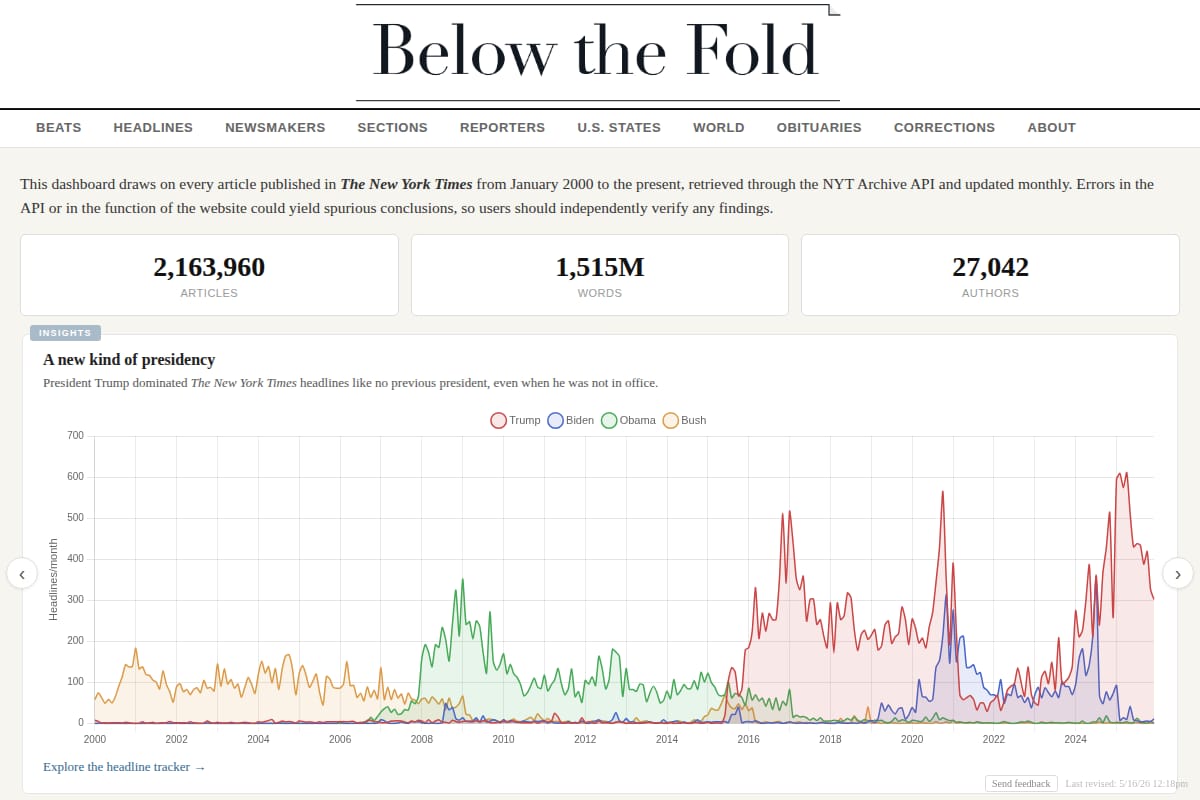
Below the Fold — A New York Times X-Ray Dashboard screenshot

Research / Data Visualization

An interactive dashboard that analyzes New York Times coverage since 2000 using the NYT Archive API, with views for reporters, beats, sections, subjects, geography, obituaries, and corrections.

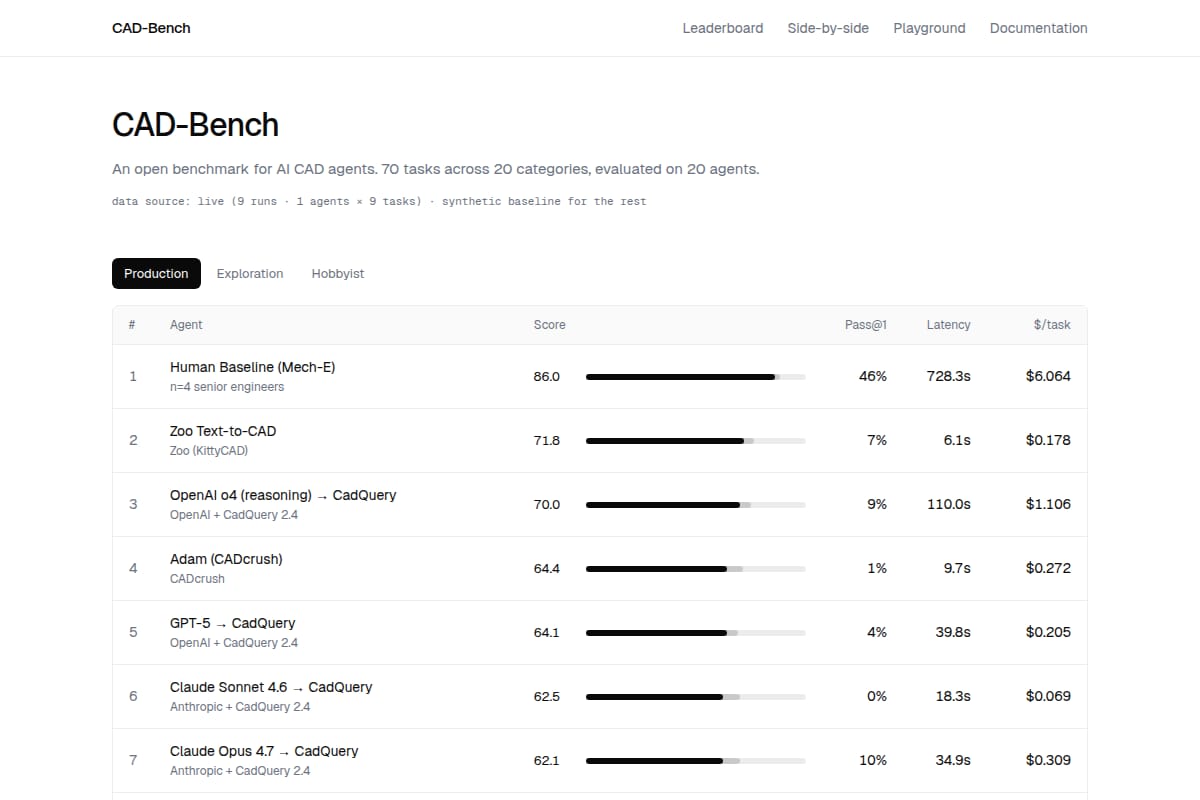
CAD-Bench screenshot
#302 CAD-Bench
88

Research / Knowledge Work

An open benchmark and leaderboard for AI CAD agents, with 308 prompts across 20 categories and layered scoring for geometry, engineering, manufacturability, and cognition.

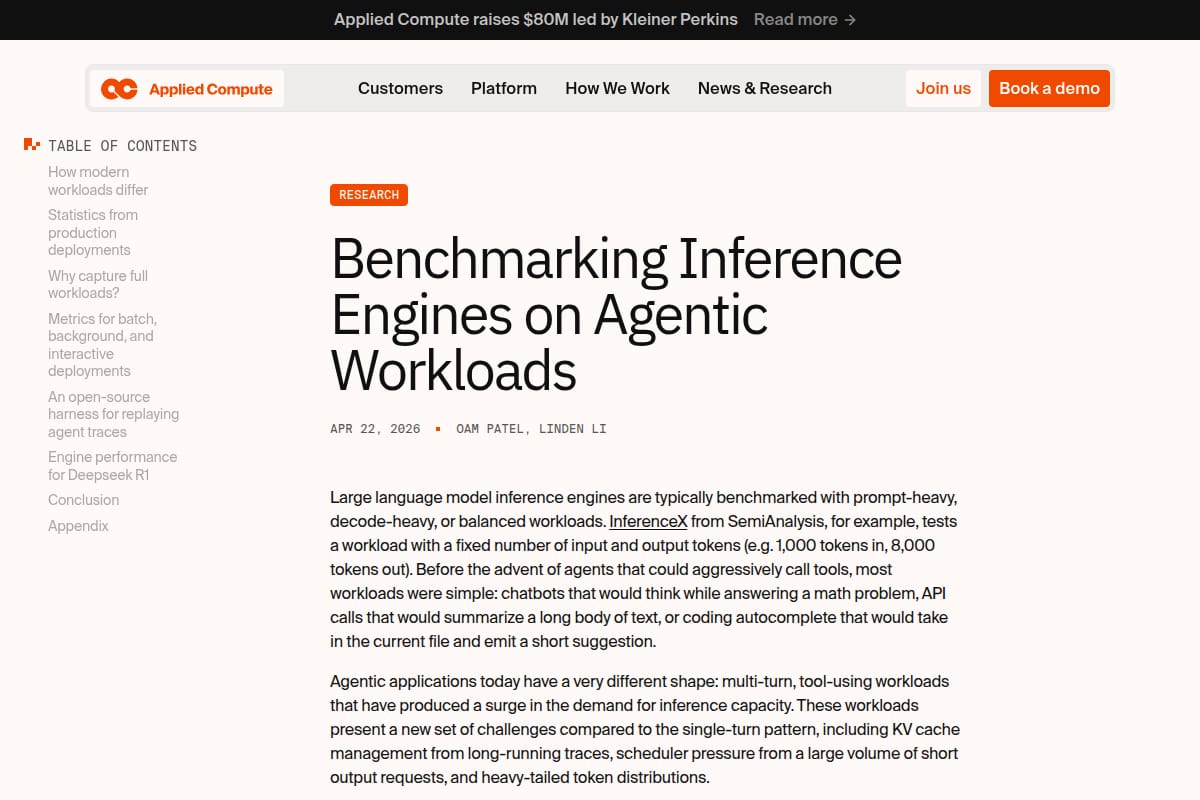
Benchmarking Inference Engines on Agentic Workloads screenshot

Research / Knowledge Work

A research article from Applied Compute on how agentic, tool-using workloads differ from traditional LLM benchmarks, with production observations, workload profiles, and an open-source harness for replaying traces.